Nellitheertha Shree Somanatheshwara Temple
- +91 80887 08914
- vbnellitheertha@yahoo.com
- Mangalore, Karnataka - India

Menu
Temple
History & Origin
Historical and Cultural Legacy of Nellitheertha
The holy place Nellitheertha and the temple have a long and glorious history. Although the first recorded material mentioning Nellitheertha dates back to 1487 A.D, there is ample evidence available at the place to suggest that the temple existed much before that. At its glorious peak, thereused to be daily festivities performed under the aegis of the ruler of Nellitheertha. From that grand state, the temple gradually declined and its existence itself was threatened towards the later part of the twentieth century. Since then, devotees and well wishers have got together to restore the temple toits previous grandeur. With the blessings of Shree Somanatheshwara, the temple renovation work is now on in full swing.
In the state of Karnataka and indeed in entire India, the South Kanara district occupies a unique place. The evergreen forests, amazing flora and fauna, the numerous temples and places of worship and monuments all make this district a huge attraction. The lifestyle of the people here exemplifies the concept of unity in diversity. For the people of Dakshina Kannada, art worship is a means of reaching the God and enriching the culture of the land. Naturally, therefore, one can observe the people seeing God in everything they do. Throughout the land, beautiful caves and lakes have become centers of spiritual and religious significance. Also, this land has given a multitude of scholars, artists, kings and other great contributors to the nation.
Historically, the Nellitheertha region was under the administration of the Chowta family. The chowtas are a famous name in Tulu Naadu and it is said that the temple flourished under their administration and was a major center for religious and cultural activities under their reign. Even today, the descendants of the chowta clan take an active interest in the maintenance and development of the temple. There are some artifacts and archeological evidence available at the temple which point to a Jain interest and influence at the temple. These are evidence to suggest that the temple and the region was probably under the administration of Jain kings of the region.

Temple
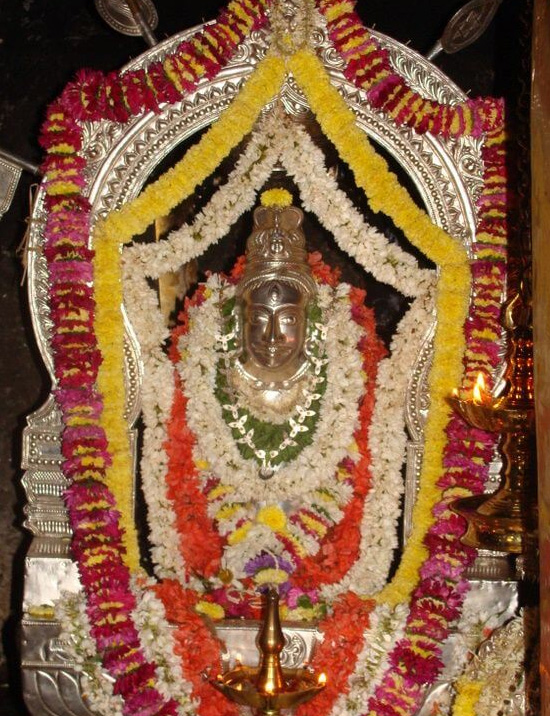
Shree Somanatheshwara Temple
The Lingam made of pure Saligrama shila, along with other significant artifacts like the Arasule Mancha and Arasule Mantapa, have been carefully preserved and restored. The temple’s intricate features are maintained to honor its historical glory and sacredness.
Temple
Shree Somanatheshwara Temple
The Lingam made of pure Saligrama shila, along with other significant artifacts like the Arasule Mancha and Arasule Mantapa, have been carefully preserved and restored. The temple’s intricate features are maintained to honor its historical glory and sacredness.
Temple
Shree Somanatheshwara Temple
The Lingam made of pure Saligrama shila, along with other significant artifacts like the Arasule Mancha and Arasule Mantapa, have been carefully preserved and restored. The temple’s intricate features are maintained to honor its historical glory and sacredness.
Wonder Cave
The Enigmatic Cave of Nellitheertha
To the right of the temple,
one can see the entrance of the historical
natural Cave.
By moving forward around 200 metres
inside the cave, one can take a holy dip in
the sacred lake (Nellithhertha) inside. It is
believed that after one takes the holy dip
and performs abishek / puja to Shivalinga
therein with one’s own hands, they will be
cured of some types of skin diseases.
They can also visit the seat of the penance
of Maharshi Jabali.
Water is always dripping in the shape of amlaka / Nelli (goosebarry) inside the cave. Hence the name Nellitheertha (Amlaka Theertha). Known for its natural and religious importance, this temple has devotees who can enjoy spirituality and the glory of nature simultaneously. Access to the cave is open to all, irrespective of caste & creed.
Though the path inside the cave is a bit steep,
the place where Pond and Shivalinga are
located is wide and high enough for hundreds
of people to stand together and enjoy.
The cave does not end here, but no one is
allowed to go beyond the lake point. Before
entering the cave, all devotees should take a
bath in another pond called ‘Nagappa Kere’
outside the temple and enter in wet clothes.
Another speciality of this temple is that the cave
entry is allowed only for six months in a year,
that too only till the mahapuja in the afternoon.
The cave entry begins every year on the Dhanur Sankranti day (17th of October) and
ends on the Mesha Sankranti day (April 14). However, in the main temple situated
outside the cave, the daily puja, worship and festivals of Sri Somanatha and Sri
Mahaganapathi are performed daily as per the Agama Shastra without any restrictions.
Govt. of Karnataka has also identified this as an important Tourist centre, but yet to
provide the required facilities.
